

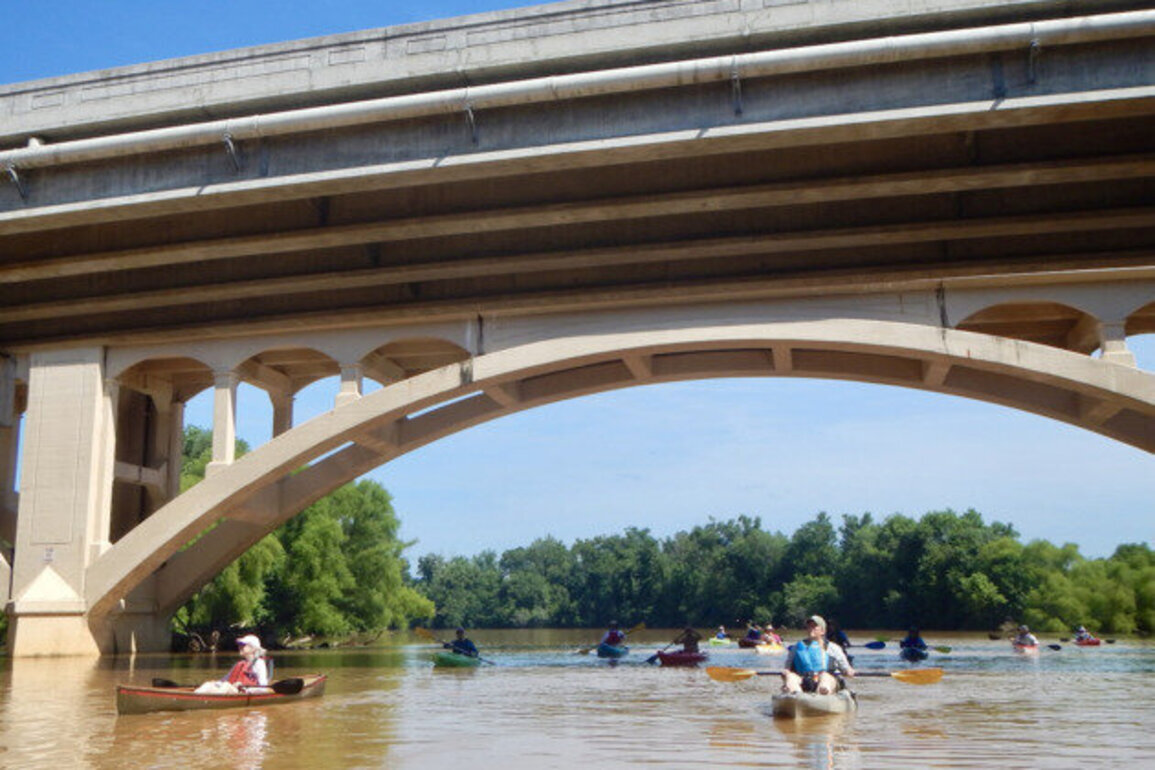
Spring is around the corner and North Carolinians who want to get out on rivers have options with the state's paddle trails.
North Carolina has a number of trails on its waterways, including the Haw River State Trail, Roanoke River State Trail and Deep River State Trail.
Joe Jacob, owner of Haw River Canoe and Kayak Company, has been involved with the North Carolina Paddle Trail Association. He said the group held a conference two decades ago on how people could build paddle trails in their communities and local support in the meetings led state lawmakers to recognize the paths.
"They saw it as not only something that was a natural part of a local municipality or countywide recreation program but also as an economic generator that had brought tourist dollars into the local community," Jacob explained.
Like other state trails, maintaining funding from the North Carolina Division of State Parks and Recreation is key. Jacob argued adding more facilities, such as restrooms, is also important for paddle trails. The Great Trails State Coalition will hold its advocacy day at the state Legislature May 12.
Ward Swann, Yadkin River State Trail coordinator for the group Yadkin Riverkeeper, oversees another paddle trail in North Carolina. He said one of his goals on the Yadkin trail is having access points every five miles. Swann added the river provides great fishing opportunities and the ability to see an abundance of wildlife, making being on the river a sublime experience.
"When you're on the water, you feel like you're a million miles away," Swann observed. "There are times when you can, with barely little effort at all, be as remote as if you were in Montana or further just by getting on the water that afternoon."
Krista White, graduate research assistant in the College of Natural Resources at North Carolina State University, has been part of research on the effects of paddle trails, with a report expected to be released this summer. She said paddlers have identified issues such as parking, water quality and accessible launches as barriers to paddle trails. White stressed such information is useful when advocating for more funding to support local infrastructure.
"It helps take away the barriers for accessible recreation for everyone as well when we understand what the majority of the users are looking for when they're trying to find a paddle trail," White emphasized.
Source: Public News Service